
AI tooling · Terminal · Web
skillFight
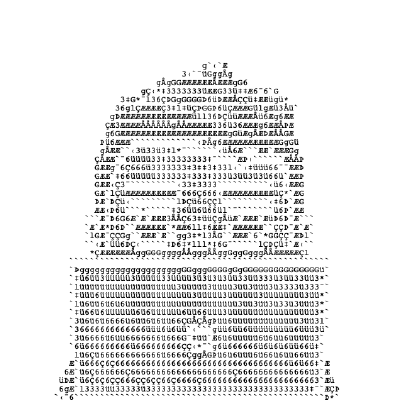
Points at your Claude skills, finds the ones fighting over the same requests, and stages the verdict as an ASCII arena.
- TypeScript
- React
- Ink
- Anthropic API
The write-up
README
view on GitHub ↗

You've installed a pile of Claude skills. Some of them overlap — two skills that both want to fire for the same request, quietly fighting over Claude's behavior. skillfight points at your skills folder, finds the overlaps, and tells you who wins, what to merge, and what can coexist — with pros, cons, and a rationale you can audit. It never deletes a skill; it advises, you decide.
./skills/*.md ──► engine ──► verdict (winner / merge / coexist) ──► arena
A run is local and stateless: it reads your skill .md files, sends them to
the model you pick (Anthropic, OpenAI, or a local model), and renders the
result as an ASCII fighting arena — the same view in your terminal and in the
browser.
Install
Requires Node 20+ and pnpm.
git clone https://github.com/MasterYoav/skillFight.git
cd skillFight
pnpm install
pnpm build
Use
Point the TUI at a folder of skills (recurses; a skill is any .md with a
frontmatter description):
pnpm tui ~/.claude/skills            # the fighting arena, in your terminal
pnpm tui:demo                        # see it with sample data, no key needed
Pick a provider as the second argument (default anthropic):
pnpm tui ~/.claude/skills openai
OLLAMA_MODEL=llama3.1 pnpm tui ~/.claude/skills local   # fully offline
Prefer the browser? Run the web app + server together — the server holds your API key and the browser never sees it:
pnpm dev # server (:8787) + web (:5173), open http://localhost:5173
The web app has two modes over the same roster:
- Arena — which of your skills overlap and fight (winner / merge / coexist).
- Trials — throw real tasks at the roster and see which skill fires for each. Every task is a hit (one skill answers), contested (two skills fight over the trigger), or a gap (nothing covers it). This is the "best skill for what task" view — it tests whether your descriptions actually route.
Or stay headless: the CLI writes verdict.json, which the web app also loads via
drag-drop / file picker:
pnpm analyze ~/.claude/skills # → verdict.json
Providers
| Provider | Credentials | Model env |
|---|---|---|
anthropic |
ANTHROPIC_API_KEY or ant auth login |
(claude-opus-4-8) |
openai |
OPENAI_API_KEY |
OPENAI_MODEL |
local |
none (Ollama / LM Studio / MLX) | OLLAMA_MODEL, OLLAMA_HOST |
Token usage is shown live; local servers that don't report it show n/a.
Privacy: anthropic/openai send your skill text to that provider.
localkeeps everything on your machine.
Library
The engine is usable directly:
import { analyzePath, routeTasks, loadSkills, createProvider } from "@skillfight/core";
const provider = createProvider("anthropic");

// Arena — which skills overlap?
const verdict = await analyzePath("./skills", provider);
console.log(verdict.conflicts);

// Trials — which skill fires for each task?
const report = await routeTasks(loadSkills("./skills"), ["commit my changes"], provider);
console.log(report.matches[0].best, report.gaps);
Layout
| Package | What |
|---|---|
packages/core |
parser, providers, prompts, engine (Verdict + RoutingReport) |
packages/tui |
Ink terminal arena |
apps/server |
HTTP API over the engine (/api/analyze, /api/route); keeps keys server-side |
apps/web |
React + Vite web app — Arena (conflicts) + Trials (routing) |
See docs/architecture.md for the design and docs/progress.md for build history.
Develop
pnpm test        # run the test suite
pnpm typecheck   # type-check all packages
pnpm build       # build all packages
Contributions welcome — see CONTRIBUTING.md.